SCVD Framework Overview
1. Looking Beyond the Brain
The Five Interconnected Contexts of Vitality
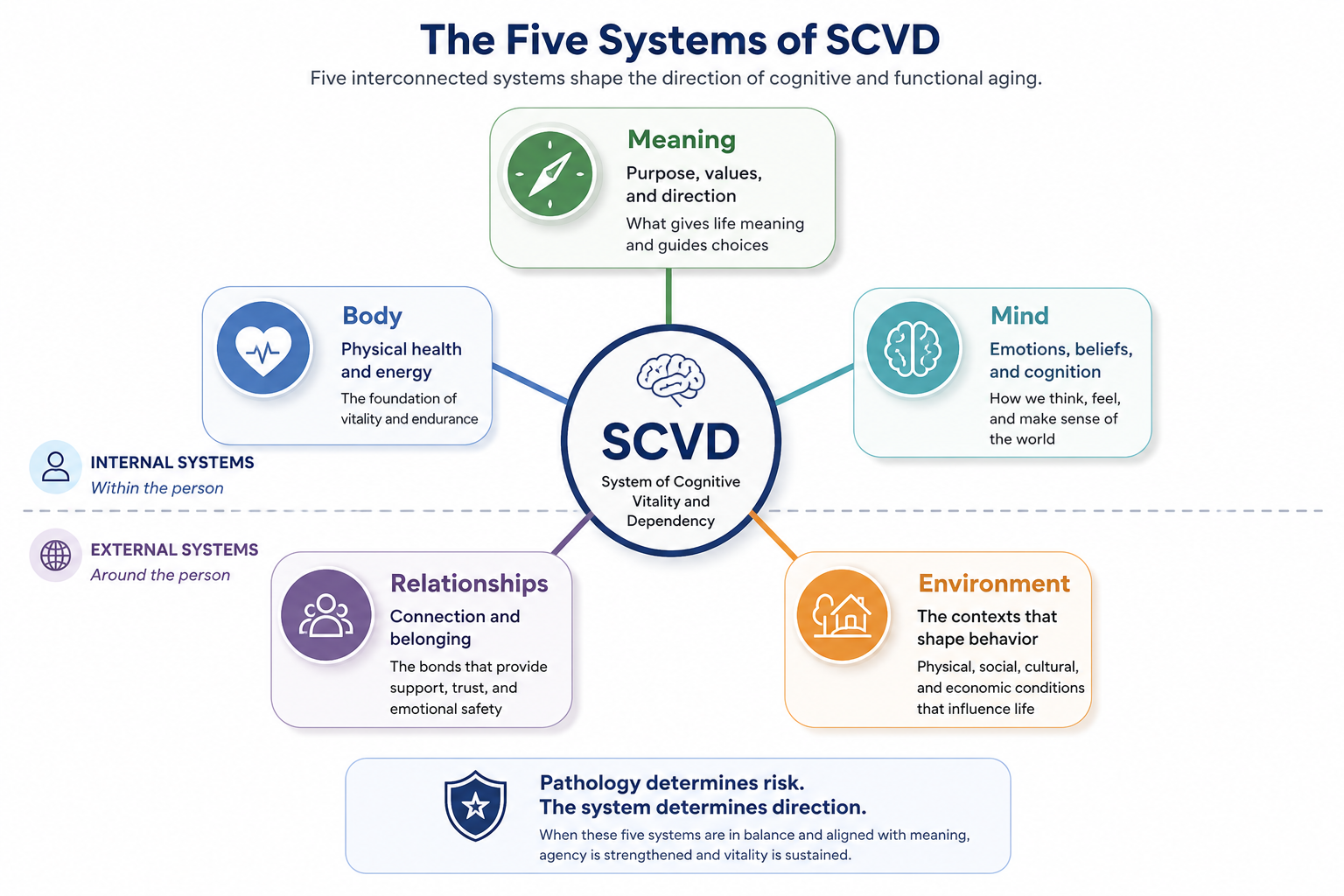
Most conventional approaches to cognitive decline begin by asking: "What is wrong with the brain?"
SCVD begins with a fundamentally different question: "What is happening to the entire life system surrounding the brain?"
Five core systems—Body, Mind, Relationships, Environment, and Meaning—form the living context of every human brain.
These five layers are not background factors. They are active, dynamic participants in how the brain functions and how quickly a system descends into dependency.
Pathology sets the risk. The system dictates the speed.
2. The Generation of Vitality
The Feedback Loop from Meaning to Active Engagement
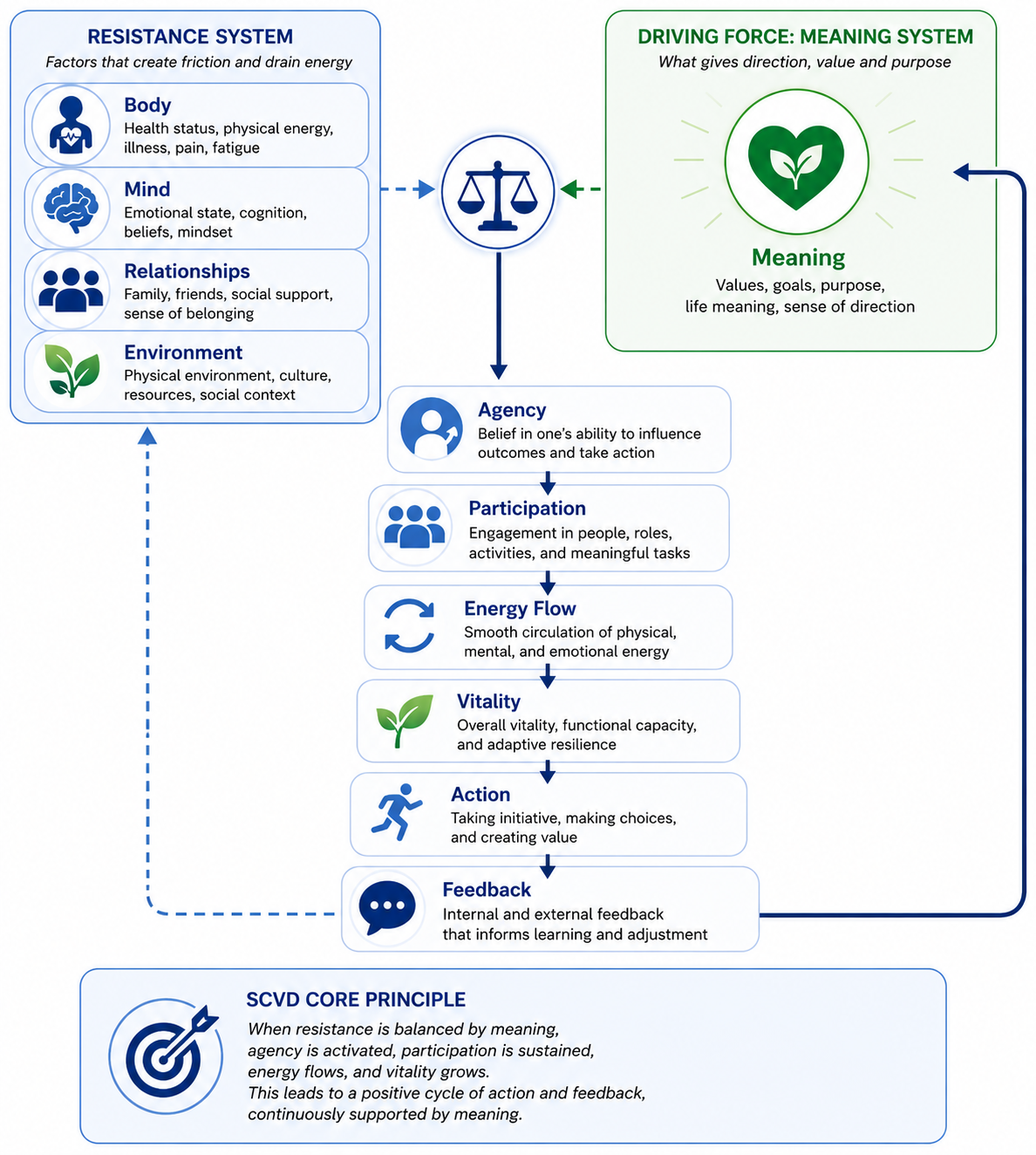
Most standard interventions target surface symptoms. SCVD targets the baseline process that actively generates human vitality.
Within this architecture, the five subsystems play two distinct operational roles:
Body, Mind, Relationships, and Environment collectively determine Resistance—the friction, structural strain, or everyday support that either drains or sustains the network.
Meaning acts as the primary source of Propulsion. It interprets what is happening, sets strategic direction, generates personal agency, and keeps authentic participation alive.
Without sufficient propulsion, even a structurally well-maintained system gradually slows to a halt. Without reducing baseline resistance, even the most profound sense of meaning cannot fully break through.
Both matter deeply. Neither is sufficient on its own.
Vitality is not a static resource we possess. It is a dynamic phenomenon we must continuously generate through active living.
3. Two Paths, Decided Daily
The Resilience Track vs. The Vulnerability Track
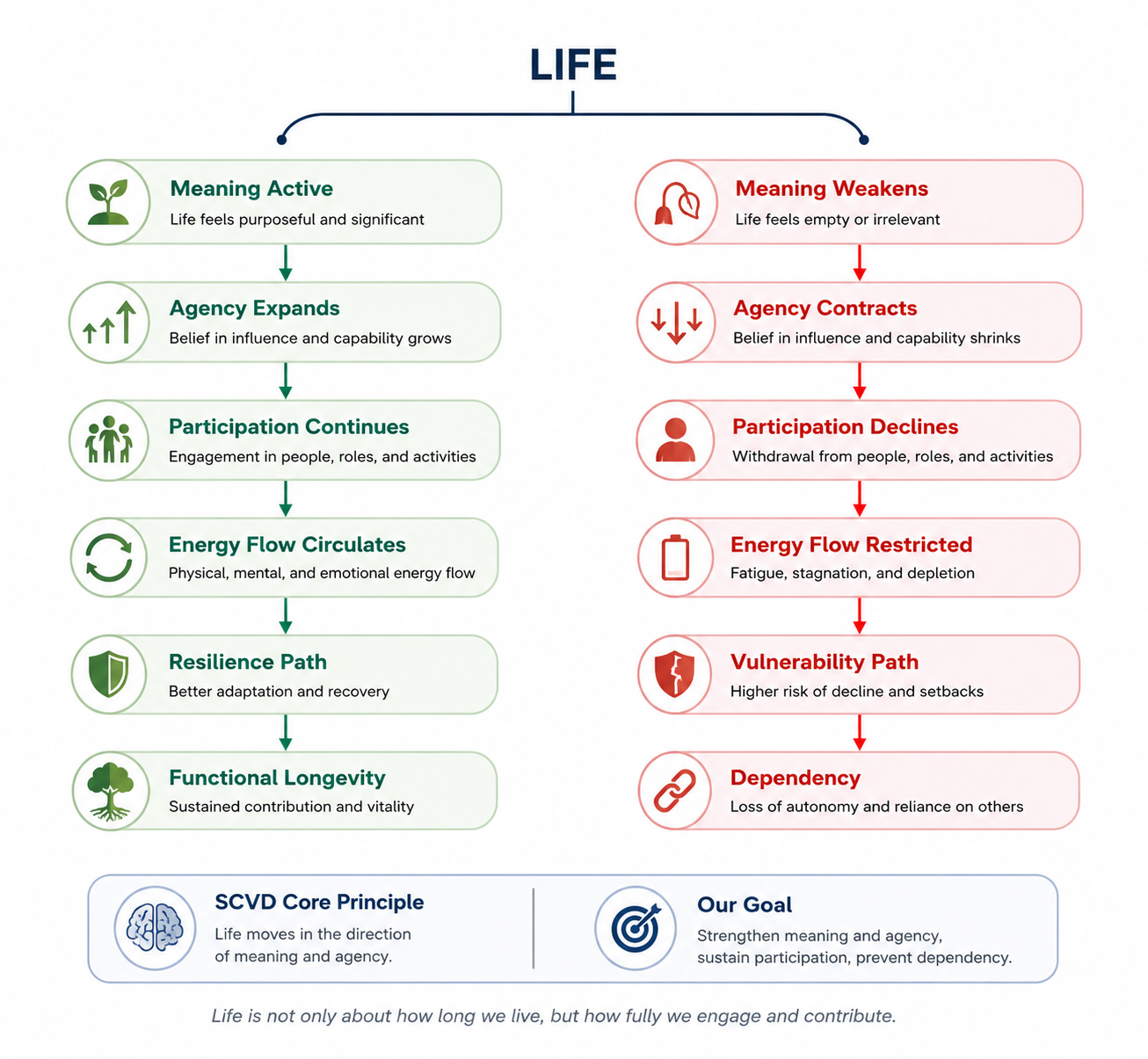
The resilience path and the vulnerability path are not immutable, pre-determined tracks.
They represent systemic tendencies—shaped every single day by small choices, everyday relationships, and immediate environments.
The strategic goal of SCVD is not mechanical perfection. The goal is to fiercely protect the basic capability and the willingness to continue participating in life.
4. From Protection to Activation
Breaking the Path from Decline to Dependency
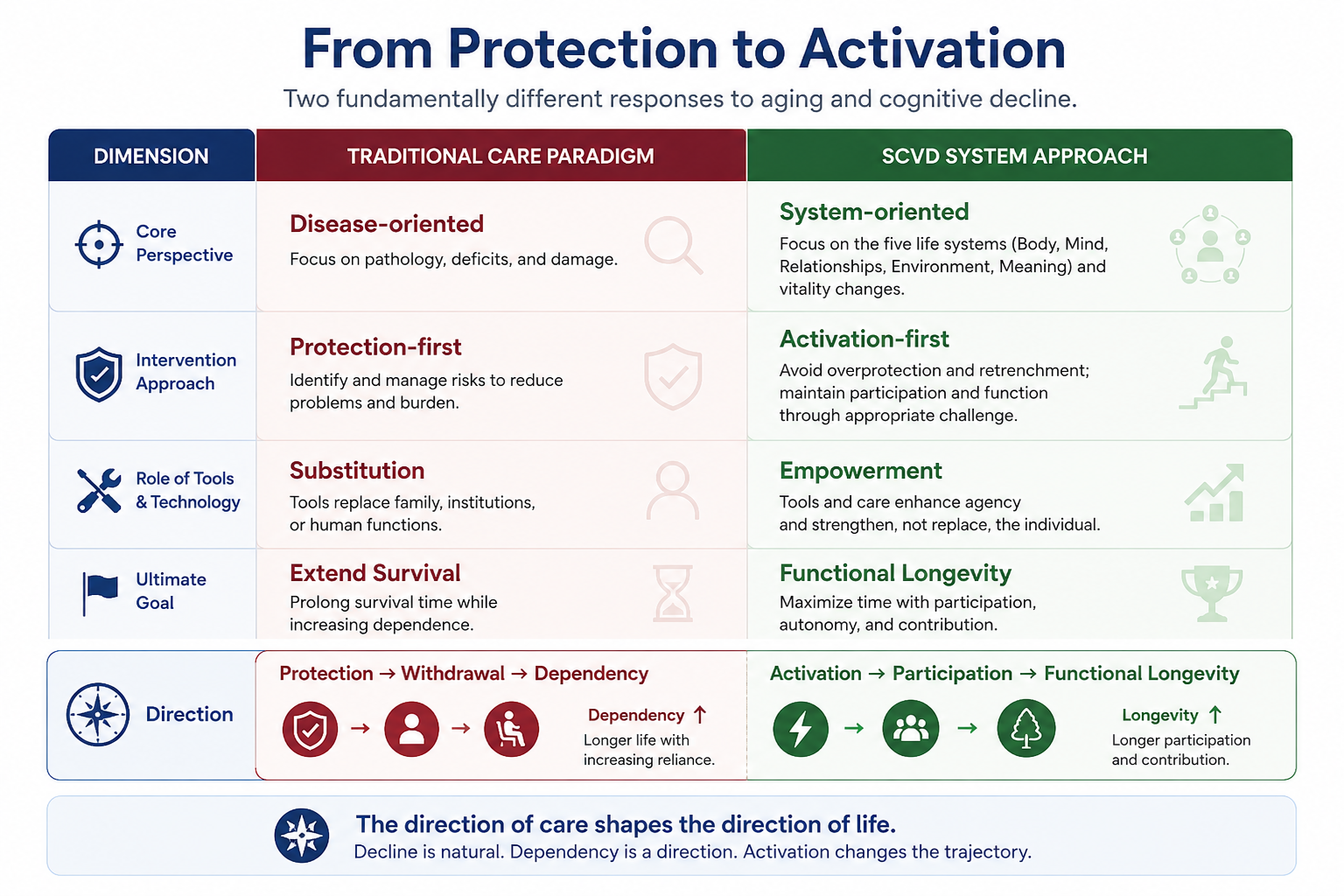
For decades, aging and dementia care have been guided by a simple, unexamined assumption: as individuals decline, they require more protection.
Protection is necessary. But when protective insulation completely replaces active participation, a severe, unintended feedback loop occurs: individuals do less, make fewer decisions, avoid challenges, and rapidly lose functional capacity.
The ultimate goal is not simply to extend biological survival. It is to maximize functional lifespan.
5. From Restriction to Contribution
Building Agency Before Dependency Begins
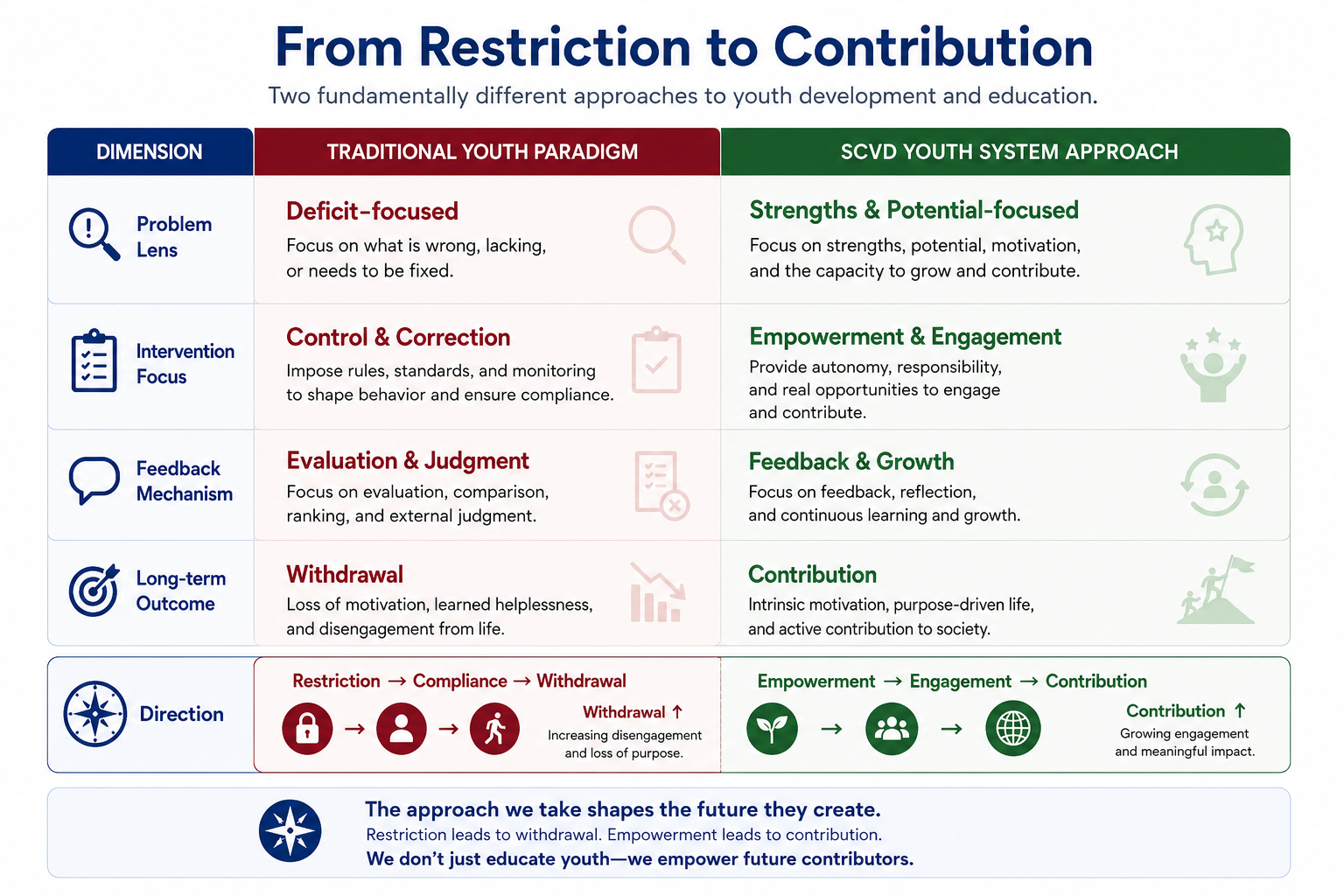
The systemic collapse of personal agency rarely begins in old age. It quietly starts much earlier, the moment an individual withdraws from active responsibility.
Participation creates competence. Competence builds confidence. Confidence strengthens agency. And agency naturally leads to meaningful contribution.